
Hard floor cleaning · South Warwickshire
Tile and Grout Cleaning in Warwick, Leamington Spa and Kenilworth
Make a noticeable difference to the appearance of your tiled floor.
Your tiles may still be in reasonable condition, but the grout has gradually become dark and ordinary mopping no longer seems to improve it. I clean ceramic and porcelain tiled floors, including the grout, for homeowners in Warwick, Leamington Spa and Kenilworth.
Speak directly to Neil, the person who will assess and clean your floor.
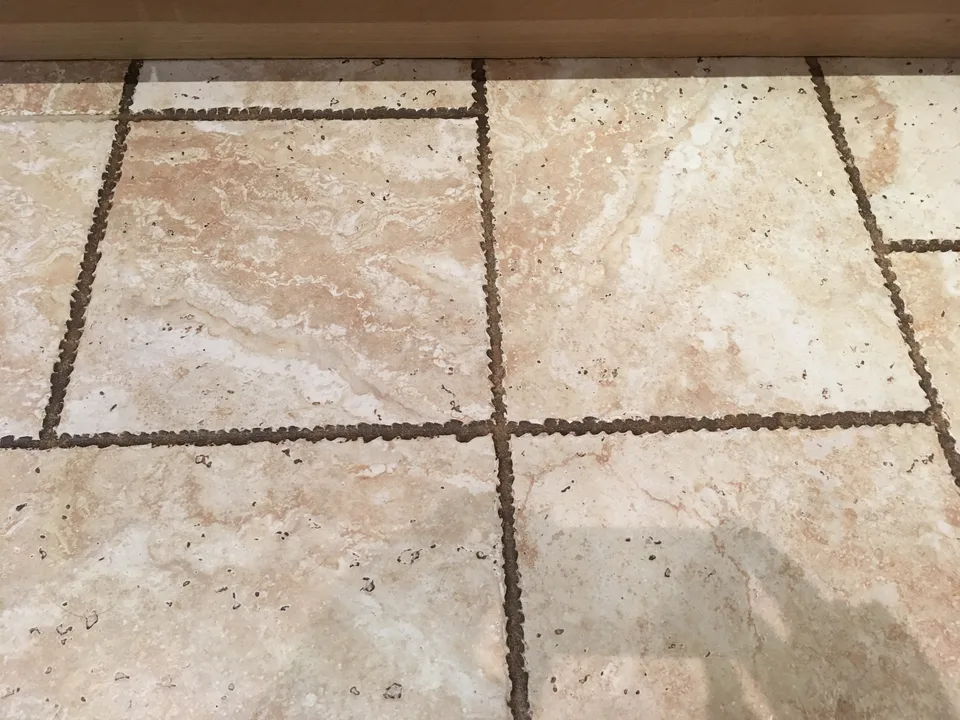
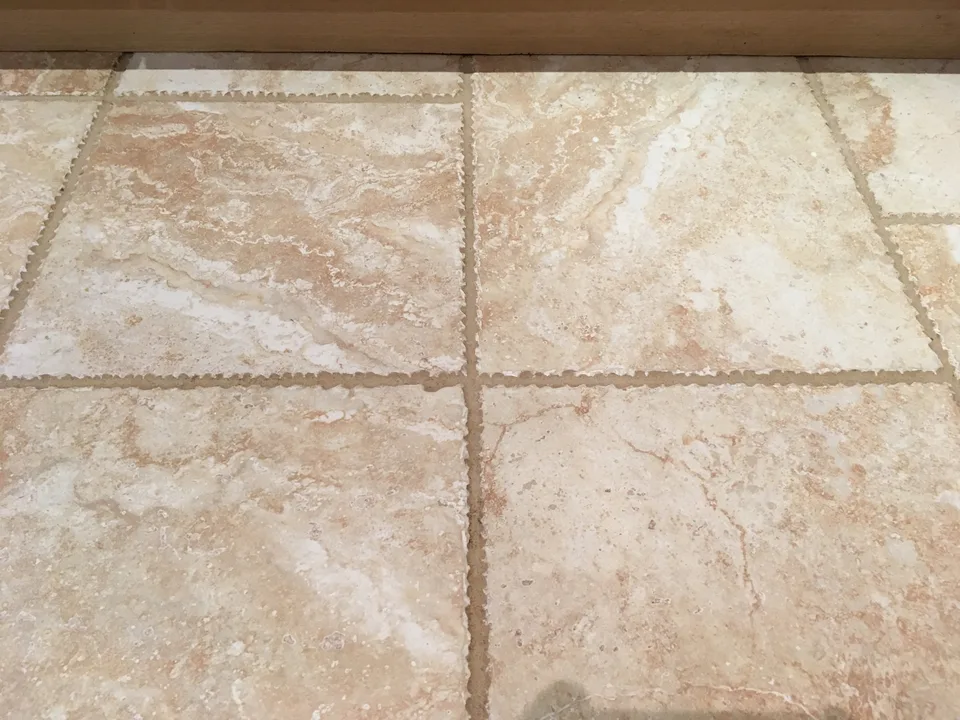
Before and after
A ceramic tiled floor, cleaned
The same ceramic floor before and after professional cleaning. This is one real example, not a promise: every floor is different, and results depend on the tiles, the grout and the soiling present.
The problem
Why does grout become so dirty?
Both ceramic tiles and porcelain tiles are often found in homes and commercial properties. They are hardwearing, practical flooring surfaces which can last for years. Whilst the tiles themselves may be fairly easy to keep clean, the grout is often a different story.
With routine mopping, the grout can absorb dirty water which settles in the lower gaps between tiles. Over time, dirt can change the colour of the grout, sometimes making it appear almost black.
An easy check
Look in a corner or under a piece of furniture where there is little or no footfall. Often you'll find lighter grey grout which gets darker as you look towards the main traffic areas.
The benefits
The benefits of cleaning tiled floors
Ceramic and porcelain tiles are hardwearing and can last for many years. However, regular mopping doesn't always remove all the dirt that builds up on the surface and within the grout lines. Over time, this can leave a floor looking dull, with grout that has gradually become darker.
A thorough clean can make a noticeable difference to the appearance of the floor.
Brighter grout lines
Grout is often the part of a tiled floor that shows the most dirt. As soil builds up, the contrast between the tiles and the grout can change, making the whole floor look tired. Deep cleaning removes much of this accumulated dirt and can bring the grout closer to its original colour, depending on its condition.
A cleaner-looking floor
Dirt and cleaning-product residues can build up on the tiles themselves, particularly in textured areas. Cleaning the tile surface as well as the grout helps give the floor a more even appearance.
Easier day-to-day maintenance
Once the accumulated dirt has been removed, routine cleaning can become more straightforward. Using the correct cleaning product and not applying more than is needed can also help prevent residues from building up again.
Make more of the floor you already have
If your tiles are in good condition but the floor has become dull or the grout has darkened, a professional clean may be worth considering before you think about replacing it. Cleaning can improve the appearance considerably, although it won't repair damaged tiles or grout, and some staining may be permanent.
Every floor is different, so the result will depend on the type of tile, the condition of the grout and the soiling present.
A careful process
How we clean tile and grout floors
There are a few distinct methods of cleaning and different types of machine, but the process can be explained as a single system.
Preparation
The first part of the job is to remove dry debris with a vacuum and brush.
Applying the cleaning solution
The floor should then be mopped or sprayed with plain water so the water can soak into the grout. The cleaning solution can then be applied, again with a mop or sprayer. Some machines also have the ability to apply the cleaning product.
Agitation
Next is the agitation stage, where the machine passes over the floor with a brush or pad. Depending on the depth and width of the grout lines, a soft or stiff brush may give a better result.
As an extra measure, the grout lines and narrow areas the machine can't reach can be agitated with a brush on a long handle.
Extracting the dirty water
The dirty water is then vacuumed away, leaving the floor almost completely dry.
Drying and checking the result
At this stage, a fan can be placed to blow air over the floor and help the grout dry. As the grout dries, it will get lighter in colour.
Once the first area of grout has fully dried, the colour can be checked to confirm the result. If it isn't quite as anticipated, the cleaning product can be changed, a different brush used or the solution given a longer dwell time.
It may be possible to have three areas of floor in progress at once: one drying, one being worked on with agitation and extraction, and a third with the water and cleaning solution applied.
Protecting the surrounding areas
Depending on the environment, different precautions may be needed. A splashguard fitted to rotary machines works well, as do protective plastic sheets for the bottom of doors. If kickboards can be removed from kitchen units, that helps. Waterproof tape can be used to protect other vulnerable areas.
If needed, the very edges can be done by hand. Every floor will be different.
Finishing the floor
Once the whole floor has been cleaned, it can be lightly mopped with a pH-neutral cleaner. This isn't needed for its cleaning ability, but it removes footprints, helps neutralise traces of the cleaning product and gives the floor an even appearance.
The work in pictures
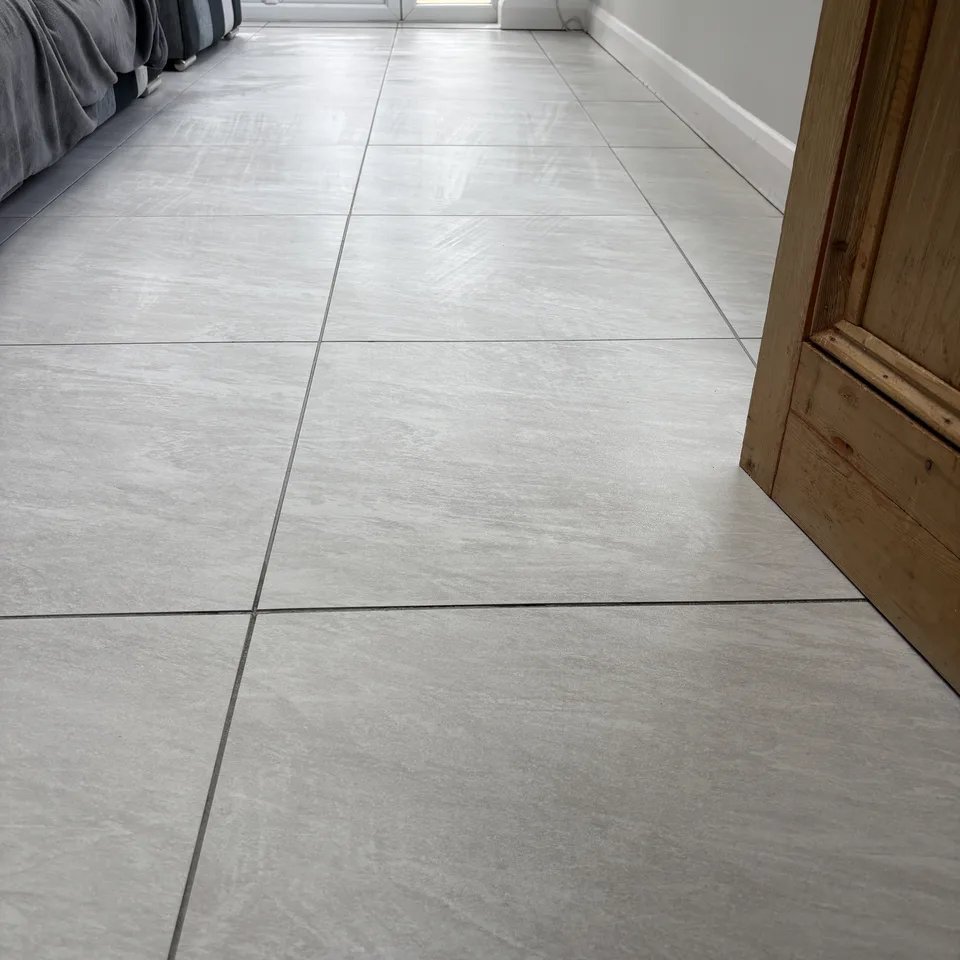
A grout brush in use, a drill brush at work on a different material, and a finished porcelain floor.
Sealing
Does the grout or tile need sealing?
Ceramic tiles don't normally need to be sealed because their glazed surface provides protection. Porcelain tiles vary, so whether sealing is appropriate depends on the type and finish of the tile and the manufacturer's recommendations.
Sealing the grout may also be worth considering, depending on its condition and the type of grout used.
Not every ceramic or porcelain floor needs sealing. It should be considered on a floor-by-floor basis.
Other floors
Other hard floors
Quarry tiles, Victorian tiles, terracotta and other types of hard flooring can also be professionally cleaned. Although the general principles may be similar, the products, brushes and precautions can vary depending on the material. See my Hard Floor Cleaning page for the full range.
For advice on keeping your floor clean between professional visits, see our guide to how to clean hard floors.
Has Your Tiled Floor Become Dull or Dark?
Get in touch about a tiled floor that needs cleaning. I can offer a free, no-obligation quote, based on photos of your floor or an in-person survey.