
Why Do Tile Grout Lines Become Dirty – And What's the Best Way to Clean Them?
By Neil Worsnop
Neil Worsnop has been professionally cleaning carpets, upholstery and hard floors throughout South Warwickshire since 2011. He has extensive experience restoring tiled floors in homes and businesses across Leamington Spa, Warwick, Kenilworth and the surrounding villages, combining practical experience with industry best practice.
A tiled floor may be swept and mopped every week, yet still gradually lose its fresh appearance. The reason is often surprisingly simple – it isn't the tiles that are excessively dirty, it's the grout.
Grout is far more porous than ceramic or porcelain tiles, allowing grease, dirt and detergent residues to soak below the surface. As this contamination builds up, the grout lines become darker and the whole floor begins to look dull and tired.
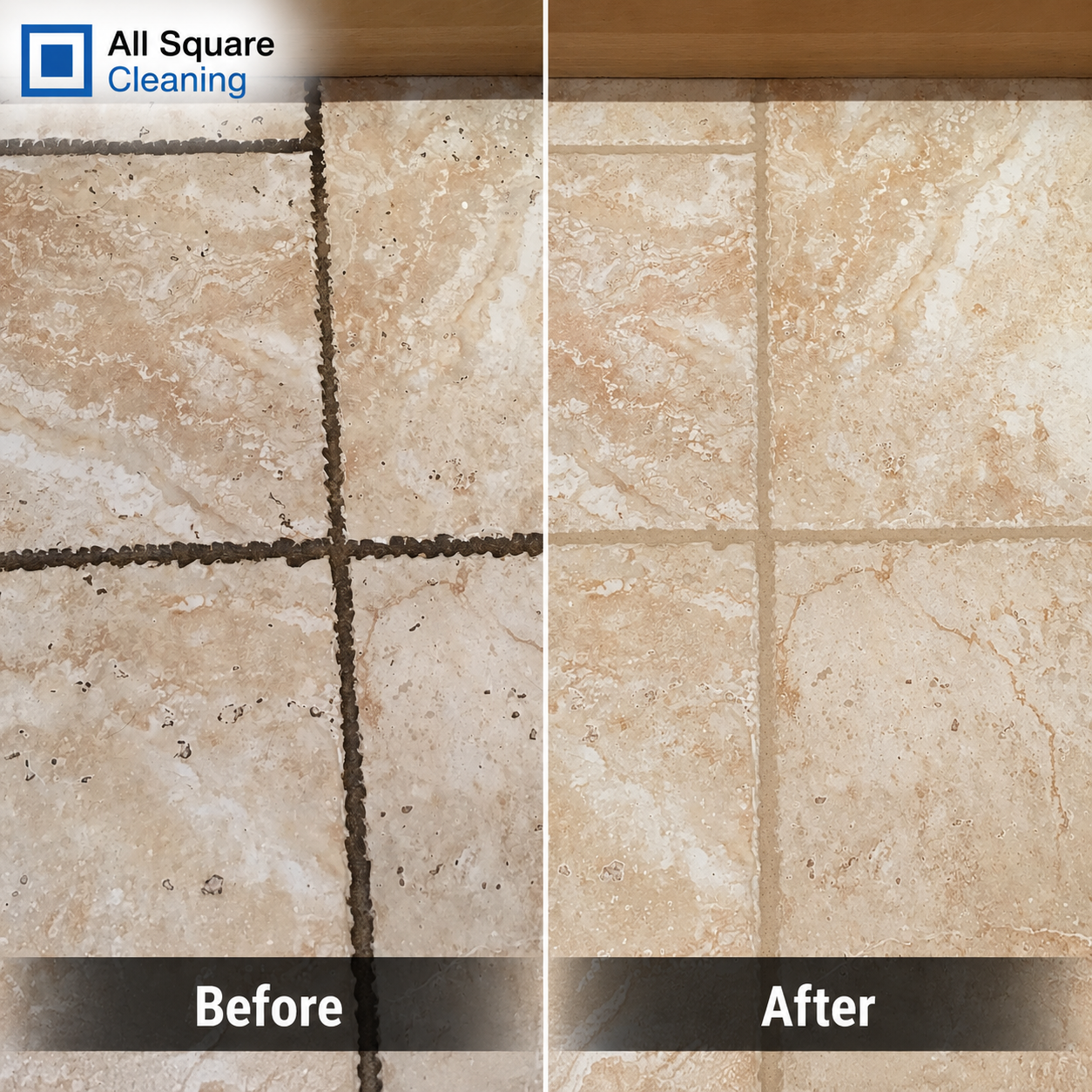
A Typical Result
Although the tiles themselves are often in good condition, years of dirt and detergent residues can become trapped in the grout lines. Removing this build-up can completely transform the appearance of the floor.
Preparation Is Everything
Professional tile cleaning starts long before any cleaning solution is applied.
The first step is to thoroughly sweep and vacuum the floor. Removing loose grit and dry soil prevents it turning into muddy slurry once water is added. It also allows the cleaning products to work directly on the grease and embedded dirt rather than loose debris sitting on the surface.
Skipping this stage often makes the cleaning process harder than it needs to be.
Why I Start with Plain Water
Many people expect the first step to be applying a strong cleaning product. In fact, I begin by mopping plenty of clean tap water onto the floor and allowing it to soak into the grout.
This softens dried dirt and old detergent residues, making them much easier to remove during the next stage of the cleaning process.
Allowing the grout to absorb clean water first also helps prevent it immediately absorbing the cleaning solution, giving the detergent time to work where it's needed.
Breaking Down the Dirt
Once the grout has been thoroughly dampened, I apply a professional alkaline tile and grout cleaner and allow it time to dwell.
This is one of the most important parts of the process. Rather than scrubbing immediately, allowing the cleaning solution to work for several minutes helps break down grease, dirt and accumulated traffic film.
I then use either a rotary floor machine or a counter-rotating brush (CRB) machine to thoroughly agitate both the tiles and the grout lines.
Finally, the dirty solution is extracted using professional vacuum equipment, removing both the contamination and the cleaning solution from the floor.
How Does DIY Cleaning Compare?
Most homeowners don't have access to specialist floor cleaning equipment.
The usual approach is to scrub the grout using a soft brush before mopping away the dirty slurry.
While this can certainly improve the appearance of the floor, it rarely removes as much contamination as professional machinery. A rotary or CRB machine provides far more consistent agitation, while powerful extraction removes the dirty slurry instead of simply spreading it around the floor with a mop.
The result is cleaner grout lines, brighter tiles and a floor that stays cleaner for longer.
The Importance of a Neutral Rinse
Once the deep cleaning has been completed, I always finish by applying a neutral pH floor cleaner.
This neutralises any remaining alkaline cleaning solution, removes detergent residues and leaves the tiles with a clean, streak-free finish.
It's a stage that's often overlooked, but it makes a noticeable difference to the final appearance of the floor.
Why Some Floors Become Dull Over Time
One of the most common reasons tiled floors lose their shine isn't actually dirt – it's detergent.
Many household floor cleaners leave tiny amounts of residue behind each time the floor is mopped. Over time these residues gradually build up, attracting fresh dirt and leaving the floor looking lifeless and the grout permanently discoloured.
Professional deep cleaning removes these residues as well as the embedded dirt, often restoring much of the floor's original brightness.
Neil's Professional View
During my years cleaning hard floors throughout South Warwickshire, I've found that the secret to successful grout cleaning isn't simply scrubbing harder.
Preparation, allowing cleaning products sufficient dwell time, mechanical agitation and thoroughly extracting the dirty solution all play an important part in achieving the best result. Finishing with a neutral pH rinse leaves the floor looking brighter, cleaner and free from detergent residues that would otherwise attract dirt back onto the surface.
About the Author
Neil Worsnop has been professionally cleaning carpets and upholstery throughout South Warwickshire since 2011. He has extensive experience cleaning wool, synthetic and natural fibre carpets in homes and businesses across Leamington Spa, Warwick, Kenilworth and the surrounding villages, combining practical experience with industry best practice.
Have a question or want a free quote?
Get in Touch