
Neil Worsnop has been professionally cleaning carpets and upholstery throughout South Warwickshire since 2011. Having cleaned hundreds of wool, synthetic and natural fibre carpets in Leamington Spa, Warwick, Kenilworth, Stratford-upon-Avon and the surrounding villages, he has first-hand experience of how different cleaning products affect carpet fibres, dyes and long-term carpet performance. Neil has completed WoolSafe training and regularly follows industry guidance and manufacturer recommendations.
One of the most important factors in carpet cleaning is the pH level of the cleaning solution being used. While customers rarely think about pH, it has a significant impact on how effectively a carpet is cleaned and, more importantly, whether the carpet is cleaned safely.
The pH scale ranges from 0 to 14, with 7 being neutral. Solutions below 7 are acidic, while those above 7 are alkaline. Different cleaning products are formulated at different pH levels because different types of soiling respond better to different chemistries. Oily and greasy soils often respond well to alkaline cleaners, while acidic products are commonly used for stain treatment, neutralisation and rinsing.
Understanding this balance is an important part of professional carpet cleaning. Using a stronger product does not automatically produce a better result. In many cases, using the wrong pH can cause more harm than good.
High pH and Wool Carpets
Wool carpets require particular care. As a natural protein fibre, wool is more sensitive to alkaline cleaning solutions than many synthetic fibres.
Industry guidance, including information promoted through WoolSafe training, emphasises the importance of selecting appropriate cleaning products for wool carpets. Excessively alkaline products can damage the fibre structure, affect the carpet's appearance and reduce its lifespan.
In practical terms, high-pH products can strip away some of the natural characteristics that make wool such a resilient and attractive flooring material. Over time, this can leave fibres feeling harsher, appearing duller and becoming more vulnerable to wear.
During my years cleaning carpets throughout South Warwickshire, I have occasionally inspected wool carpets where inappropriate cleaning products had previously been used. In some cases, the carpet had lost some of its softness and natural feel. While not every issue can be attributed solely to pH, the choice of cleaning chemistry is often a major factor.
Dye Stability and Colour Bleeding
Another important consideration is dye stability.
Many wool carpets and some natural fibre carpets contain dyes that can become unstable when exposed to unsuitable alkaline conditions. When this happens, colours may bleed, migrate or fade. The result can range from minor colour distortion to permanent damage.
Red dyes, in particular, can sometimes prove problematic in certain carpets when incorrect cleaning methods are used. Once dyes have migrated, correction can be difficult, time-consuming and, in some cases, impossible.
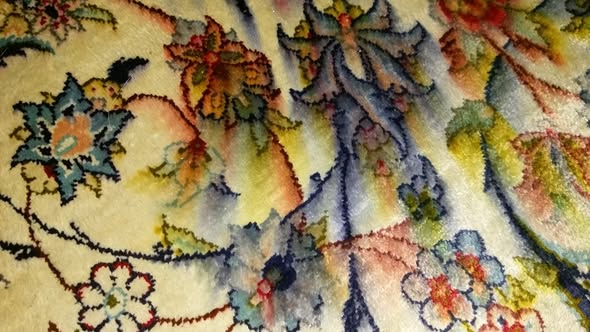
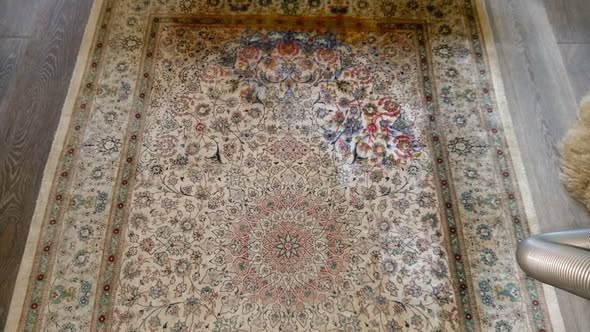
One reason professional carpet cleaners spend time identifying fibre types before cleaning is to reduce these risks. Knowing whether a carpet is wool, polypropylene, nylon or a blended fibre helps determine the safest and most effective cleaning approach.
Can Acidic Products Cause Problems?
While high-pH products often receive most of the attention, acidic products can also cause issues if used incorrectly.
Mild acidic rinses are widely used within professional carpet cleaning and can be extremely beneficial. They are often used to neutralise alkaline residues, stabilise dyes and leave carpets in a more balanced condition after cleaning.
However, highly acidic products or prolonged exposure to acidic solutions can weaken certain fibres. Depending on the fibre type, excessive acidity may reduce fibre strength and contribute to premature wear.
As with alkaline products, success comes from selecting the correct product for the carpet being cleaned rather than assuming that stronger chemistry will deliver better results.
Why Professional Product Selection Matters
Modern carpets are manufactured from a wide range of fibres, dyes and backing materials. What works perfectly on one carpet may be entirely unsuitable for another.
Professional carpet cleaning involves much more than simply applying a cleaning solution and extracting the soil. Fibre identification, dye stability considerations, soiling conditions and product selection all influence the final outcome.
A trained cleaner will typically consider the carpet fibre type, the nature of the soiling, the carpet's age and condition, potential dye stability concerns, and the most appropriate pH range for the cleaning process.
This approach helps maximise cleaning performance while minimising risk.
Neil's Professional View
One of the most common misconceptions I encounter is that stronger chemicals always produce better cleaning results. In reality, the best results usually come from using the most appropriate product rather than the most aggressive one.
Particularly with wool carpets, careful chemical selection can make the difference between a carpet that remains attractive for many years and one that suffers unnecessary wear or colour issues. Understanding pH is therefore not just a technical detail—it is a fundamental part of responsible carpet care.
About the Author
Neil Worsnop has been professionally cleaning carpets and upholstery throughout South Warwickshire since 2011. He has extensive experience cleaning wool, synthetic and natural fibre carpets in homes and businesses across Leamington Spa, Warwick, Kenilworth, Stratford-upon-Avon and the surrounding villages. Having completed WoolSafe training, Neil combines practical hands-on experience with industry best practices to deliver safe and effective carpet cleaning solutions.
Have a question or want a free quote?
Get in Touch