
Dried Blood Removal from a Polypropylene Carpet in Claverdon
By Neil Worsnop
Professional Blood Contamination Cleaning
I was recently called to a property in Claverdon to deal with dried blood contamination on a polypropylene carpet.
When I arrived, there were numerous small spots of dried blood across the carpet, together with two larger patches. The blood had already dried into the carpet fibres, so the first priority was to carefully soften and treat the contamination before carrying out the extraction.
The Carpet Before Cleaning
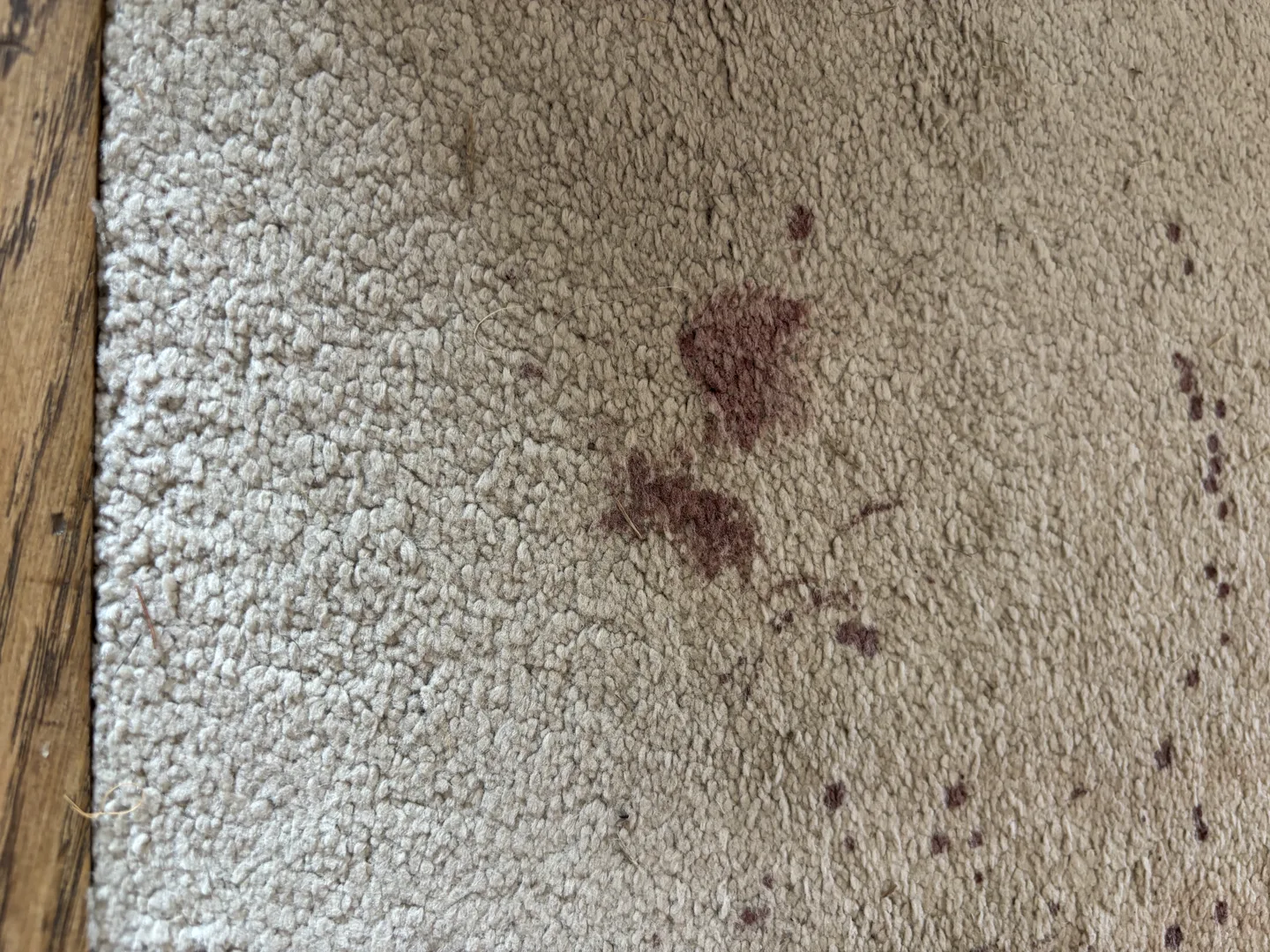
As you can see from the photograph, the contamination was spread across a relatively large area rather than being confined to one isolated spot. The two larger patches were particularly noticeable, with numerous smaller spots extending across the carpet.
Because the blood was already dry, I didn't want to simply scrub aggressively at the carpet. The aim was to loosen the dried contamination and then remove it through controlled extraction.
Step 1 — Sanitising & Softening the Dried Blood
I began by applying a suitable sanitiser to the affected areas.
The product was allowed to soak into the carpet and given time to work.
This provides the necessary sanitising treatment while the moisture also helps to rehydrate and soften the dried blood, making it easier to remove during the rinsing stage.
Allowing the treatment time to work was particularly important here because of how dry and established the blood had become.
Step 2 — Cold-Water Rinsing & Extraction
After allowing the treatment to work, I moved on to the rinsing stage using my professional carpet cleaning machine.
I used cold water to rinse and extract the affected areas.
When dealing with blood contamination, I prefer to use cold water because excessive heat can cause blood proteins to coagulate and potentially make staining more difficult to remove.
The objective was to flush the loosened contamination out of the polypropylene fibres rather than simply spreading it across the surface.
Watch the Cleaning Process
Step 3 — Water Claw Extraction
Once the cleaning and rinsing stage was complete, there was still moisture within the carpet.
I therefore used a Water Claw to extract as much remaining water as possible.
This is an important part of the process, particularly when carrying out a deeper clean. Removing additional moisture at this stage helps reduce drying times and leaves less water within the carpet.
Water Claw in Action
Step 4 — Complete Drying
After extracting as much water as possible with the Water Claw, I continued the drying process using fans/air movers and towels.
The carpet was worked until it was completely dry.
For me, the job isn't finished simply because the visible contamination has been removed. Proper moisture extraction and drying are an important part of completing the cleaning process.
The Result
This was a good example of why dried blood contamination requires a methodical approach.
The carpet had numerous small dried blood spots as well as two larger patches, but by working through the process of:
Sanitise → Soften → Cold-water rinse → Extract → Water Claw → Dry
the affected carpet could be thoroughly treated and cleaned.
The final stage was making sure the carpet was completely dry, using professional extraction equipment, a Water Claw, fans and towels.
Claverdon Carpet Cleaning
Another challenging carpet cleaning job completed in Claverdon, using a combination of appropriate treatment, professional extraction equipment and controlled drying to deal with dried blood contamination on a polypropylene carpet.
Primary service: Carpet Cleaning
Tags: Carpet · Polypropylene · Blood Removal · Stain Removal · Claverdon
Have a question or want a free quote?
Get in Touch